Showing posts with label value. Show all posts

Friday, September 11, 2020

The Disruptive Power of the Ends Game, Part 2: Invite the Customer to Help

The best way to understand how to best provide value to your customers? Ask them
(This is slightly expanded from the version published in Inc. magazine on 9/11/20.) 
As we discussed in Part 1 (at Inc., and slightly expanded here), The Ends Game argues that today's organizations are addressing "only half the battle" concerning the central question of "What are we asking customers to pay for?" The other half, which has only recently been made practical by new ways of collecting real-time information, is to evaluate how you're helping a customer achieve desired ends.

There is another important aspect to answering that question still to address. That is to directly engage the customer's unique ability to help you be even more efficient and adaptive in understanding what you are asking them to pay for.

FairPay shows how we can more fully enlist the customer as ally in understanding impact, outcomes, and ends, and in modeling value in terms of satisfaction of their needs and wants. FairPay is a rich framework for increased cooperation with the customer in playing the Ends Game. The proven principles underlying that framework make a strong argument for enlisting each willing customer in helping to determine what you should be asking them to pay for. 

I do not argue here for the specific methods of FairPay. My point here is simply directional -- that the strategies of FairPay point to how the unique wisdom of each customer can help cut through the most knotty challenges of the Ends Game.

The breakthrough in the FairPay framework is to restructure the price-setting process using the continuity and context of an ongoing relationship to get customers to cooperate with you in determining what is a fair price. Why is that vitally important? Because, as Marco and Oded say, "[t]he ultimate outcome, of course, is value...Actual satisfactions." The customer is the final arbiter of which of their outcomes matter and how much value and satisfaction they deliver. They decide to become and remain your customer on the basis of their perception of value, and of the fairness of your price. You can use all the modeling and impact data you can find, but until you are able to know what is in your customer's mind, you may not get to the answer that counts.

FairPay begins as a price-setting matter (and so may seem of relatively narrow interest). But price is just the monetary balancing of net value exchange. FairPay works for two reasons:

  • Each customer has insights into the value they obtain that you can only understand if they share those insights.
  • You can draw those insights out because most customers (especially your best customers) want to be fair about what they pay you -- if you gain their trust and motivate their cooperation. 

FairPay centers on the point of price-setting, by asking each participating customer to have a say in what the fair price is. How much of a say is determined in the context of the relationship, recognizing that the game of commerce is usually a "repeated game" that involves repetition of transactions over time. A repeated game works best when both parties benefit from cooperation, and so can be motivated to build on that in a virtuous cycle.

FairPay makes that motivation to cooperate central and explicit: "You, the customer, can have a say in what the price is for each transaction, but we, the business, will continue to play that kind of FairPay game with you only as long as we agree that your pricing is reasonably fair. We agree to have ongoing dialogs about value -- so we can agree (or not) whether the price for any interval of service is fair." But wait, there is more...

Price-setting is just the start of how FairPay changes the Ends Game

Price-setting can only be fair if the revenue model is fair. The FairPay dialog is not just about the price, but also about "What are we asking customers to pay for?" The customer has an intuitive, but richly multidimensional, model of what value they want, what value they are getting, and what they think is a fair price for that value. Dialog can surface whatever outcomes or other value metrics the customer thinks are relevant to justify their sense of what is fair for them to pay at any given stage in the game. The business may suggest and counter with any factors that it thinks relevant. This creates a new dynamic that opens up the kind of inter-party negotiating range and nuance that is familiar in traditional bargaining, but with a key difference: the ends of the negotiation are explicitly on lifetime value over the relationship rather than on one-time transactions.

That ongoing cooperation simplifies the challenge of finding proper metrics of value. That effort becomes more nuanced and forgiving, because it is just a stage in an adaptive process that emerges as this dialog unfolds. Different value metrics may be posited by either party. Any working agreement on fairness can be reopened as the context changes and other metrics emerge as more relevant. The exact choice of metrics (and of price) at any point in the game becomes just a working approximation in an ongoing process of continuous learning. The process of identifying and eliminating barriers to access, consumption, and performance is no longer just a process of one-sided inference by the business, but also of asking the customers what barriers they see.

The process becomes more fuzzy -- but that is its benefit. Modern business abhors fuzziness as unpredictable and hard to manage, but value to humans is inherently fuzzy. The "proof" of the value is in the customer's agreement to that value as being fair, not in some abstract mathematical construct of value metrics. Those constructs are only a tool for reaching human agreement.

As Marco and Oded say, "The challenge lies in accountability, which means cultivating the relationship between organization and individual in a manner that is sustainable and mutually beneficial. The right revenue model is what sustains that relationship." FairPay is a method for enlisting the customer in a process for converging on accountability and agreement on the right revenue model (and adjusting it when needed) -- even if that model is a fuzzy one.

Managing an emergent and cooperative process of value discovery

None of this is counter to the lessons of The Ends Game. To manage this process at scale, a business must be able to reduce decisions to algorithms that can be automated in a way that requires more nuanced human judgment only on an exception basis. We need to study the barriers and be creative about finding the right metrics of value and combining them with the right weights.

That is how we evaluate whether the customer's assessment fair value is one that we should consider fair enough for us to be able to benefit from doing business with them. We work with all the impact data we can glean, and use it the best way we know how.

[Not included in the Inc version: Without FairPay, we have to slog through the swamp of incompleteness that Marco and Oded allude to in describing the Pay per Laugh example: "...an organization that uses a performance model lives and dies by the 'quality' of the metric it adopts. Some people may enjoy the show immensely but laugh very little, while others may attempt to stifle laughter in order to save some money. These concerns are always going to exist unless the metric is a perfect, tamper-proof proxy of the actual value derived by customers. Finally, the right technology is essential to make pay-by-outcome work."]

FairPay dialogs provide a way to work heuristically around the limitations that Marco and Oded describe in how our impact data inform us about the outcomes and their perceived value -- when they are not meaningful, measurable, robust, and reliable enough, or lacking in breadth and depth. We build a tentative valuation model for each customer, and use that model to suggest a price that seems fair based on what we know about the value they received. But then, if the customer disagrees with our assessment of value, that is where we work to build in a new level of learning. We can use multiple choice dialogs to ask the customer why they disagree.

The power of FairPay to draw out the customer's perspective in a trustworthy way can be better understood by considering the three building blocks that drive this process (a formulation Marco contributed to in our journal paper on FairPay):

  1. Empowerment to participate in pricing. (Asking customers to participate in pricing decisions is empowering, and empowerment is known to foster engagement and satisfaction.)
  2. Dialog that is open to considering the price in terms of all aspects of value, including needs, wants, features, services, pain points, barriers, and price levels.
  3. Reputation, as the way to build trust that the customer's use of that empowerment will be acceptably fair. (Develop a fairness rating for each customer. continuously update it, and use it to decide how to reward generosity and when to warn or restrict customers who are repeatedly unfair.)

This drives the new form of repeated game structure of FairPay, and informs it to serve as a cooperative value discovery engine that iterates to be adaptively win-win (as explained in detail in my book and the many works listed on my blog).

Algorithms can become increasingly effective in understanding how the value metrics of the customer differ from our models for that customer, determining if that is fair, and if so, adjusting our model for that customer, to build a new and better model for them. We can apply heuristic thresholds (simply, or with machine learning) to determine what price is fair enough to continue the game profitably and what is not. We can also draw on human intervention to deal on an exception basis with an ordinarily fair customer that surprises our algorithms by seeming unfair in a given context.

FairPay might appear to each customer as a "bot" that acts as a customer contact who knows them as an individual -- representing the business, understanding that customer's needs and values, interacting with them in whatever way works best for them, and managing the relationship.  This FairPay bot serves as an approximation of my value demon, to learn how the customer thinks about value -- and to nudge them to see the value that the business would like them to pay for. It manages a 360 degree relationship of cooperation (a much expanded level of CRM), to co-create value in whatever way is desirable to both parties, and to divide the value surplus fairly. (Again, for exceptional cases where the bot hits its limits, human managers can intervene.) This adaptive learning process can drive service improvements, bundling, up-selling, and development.

What the customer knows and thinks

This dialog with the customer about value should be central to all business. How can you expect to understand the value and satisfaction your customers perceive if you don't ask them? How can you make it easy and natural for them to tell you when you don't seem to get it?

Sure, even without these formalized dialogs, some subset of customers alert you with complaints about the most egregious outcome problems, but how many don't bother -- because they don't have an easy mechanism, and they don't think you really want to hear from them (or that you will not really listen if they do tell you). Instead, it seems that, outside of small, carefully managed focus groups, businesses are afraid to talk with customers, to ask what they think about value, and seek only to talk at them about the wonderfulness of their offerings.

As Marco and Oded say, "There may be factors that contribute to an outcome that the organization cannot observe, measure, or control. To the extent that there are significant differences in the value customers derive from a product or service, then the chosen outcome measure must be 'personal' enough to reflect this." Making that personal enough will be a tall order for the foreseeable future if we only look through a one-way glass, and don't find a good way to ask the customer for help.

This FairPay process helps to more fully address "...the trillion dollar question...the extent to which customers are willing to share their information with firms and fuel the Ends Game ...companies must be able to communicate that sharing one's data has never been a more valuable investment." The FairPay repeated game structure seeks to constantly drive that communication and generate the proof to the customer that it beneficially results in value at a fair price. In parallel, you can use whatever impact data you can glean to validate what the customer reports, and determine if they are being honest with you or trying to game the system.

Marco and Oded argue that "when customers know firsthand that an organization can use these [impact] data to deliver the outcomes they desire, it puts both parties in the exchange in an enviable position." The deeper cooperation of FairPay gives businesses a way to play the Ends Game in a way that is seen to be win-win -- to deepen their relationship with those who want to play fairly, and to cull out those customers who choose not to deal fairly. Some businesses, and some customers, may be slow to recognize how powerful this is, but those who do will find new power to co-create and share in value that more one-sided approaches cannot equal.

Opening this level of dialog with customers will take learning and experimentation. But finding the right impact data and using that to build the right revenue model without asking the customer will also be very challenging -- especially wherever customer needs and wants are diverse and subject to change with context and time. FairPay points to ways to harness what the customer can tell you, combine it with what you can figure out for yourself, and continuously adapt your revenue models accordingly.

This kind of deeply cooperative relationship can enable you to play the Ends Game more effectively -- to attract and retain more customers, make them better customers, and increase the lifetime value that you and they share in.

------------------------

More about FairPay

A very brief and simple introduction is in Techonomy, "Information Wants to be Free; Consumers May Want to Pay"
(FairPay is an open architecture, in the public domain. My work on FairPay is pro-bono. I offer free consultation to those interested in applying FairPay, and welcome questions.)

------------------------

To stay updated and interact with others interested in FairPay, please join the LinkedIn group, “FairPay: Adaptively Win-Win Customer Relationships.” 

Tuesday, September 8, 2020

The Disruptive Power of the Ends Game (Part 1 of 2)

Why businesses should not just ask what customers want, but measure whether they are getting what they need.
This is a slightly expanded version of Part 1, published in Inc. magazine on 9/8/20. This Part 1 concentrates on what is in the book, The Ends Game. Part 2 takes off from there, to explain how FairPay strategies can enable businesses and customers to play the Ends Game in a way that is even more efficiently win-win -- and thus create and share in even more value.  (See the Inc. version of Part 2, or slightly expanded here.)
The Ends Game is the title of an important new book that explains why now is the time to focus on helping customers achieve the ends they seek, and sharing in the value that they co-create with them. It argues that the ways enlightened and sophisticated companies currently attend to their customers are excellent, but only half the battle. This book presents a concise and clear manifesto of what is missing, why it is essential to focus on it now, and how to embark on the path to do that. It is written by Marco Bertini and Oded Koenigsberg, professors of marketing known for their insights into pricing strategy.

I had the pleasure of reading a pre-release copy because Marco co-authored with me two articles about the FairPay framework. This new book by Marco and Oded concentrates on how to think about "What are we asking customers to pay for?" As they say, that is essentially a question of revenue models. (It is also foundational to how FairPay addresses a related question: how do you harness new levels of cooperation with customers to be even more efficient and adaptive in doing that?)

Why read -- and play -- the Ends Game now?

This is a deeply researched and insightful work, offering a coherent vision of why playing the Ends Game is the future of business. It lays out a concise manifesto for business model disruption, centered on revenue models, and explains why pricing models are the essence of business. It offers conceptual grounding supported by a wide range of examples, in a style that is neither abstract nor buried in anecdote.

Marco and Oded show how businesses have been focused on the means for serving customers, but rarely focus on the real ends that customers want. It explains how all the work of customer care, market research, design of customer journeys, and operational skill and responsiveness are typically directed at the means not the ends. Businesses pride themselves on their focus on the customer, the authors note, "but then the same company pays hardly any attention to customers when it decides how to earn revenue from them."

This focus on ends is not a new idea, but it has been neglected because we lacked the technology and data to address the customers' ends at scale. The authors point (as Marco and I have in our co-authored papers) to the invention of the price tag around 1850 as a key turning point from which traditional business decoupled itself from consideration of individual customer value proposition in order to scale: "organizations gradually shifted their pricing decisions away from customers and what they value, which was the focus of haggling, to the one piece of information they could trust and readily collect: information on the cost of making an offering and bringing it to market." (Of course competitor pricing has also been an important factor.) Pricing for value on an individualized basis has long been understood to be the ideal in theory, but in very hard to do at scale in practice.  The compromise has been to sell the means to the ends, and hope that was close enough.

What has changed to make the Ends Game feasible is the growing availability of new kinds of "impact data." Impact data provide "information on when and how customers consume products and services, and how well these offerings actually perform." That new data lets businesses "move from promises to proof." Technology makes the achievement of ends transparent and accountable. Companies can now record consumption events and, increasingly, even observe the value obtained from them. This "post-purchase behavior" can now be "observed directly, completely, and in real time."

Marco and Oded make a strong case for the value of these new strategies to benefit not just businesses, but their customers: "The powerful combination of real-time consumption patterns, personalization, and rich contextual data--all at scale--provides companies a basis to establish and reinforce trust with their customers, one by one." I was struck by how this positive vision provides an important counterbalance to the fatalistic view of Shoshana Zuboff's influential The Age of Surveillance Capitalism, and how The Ends Game rightly highlights the benefits that could come from responsible, opt-in uses of data by businesses.

Applying impact data to enable revenue models that are accountable for the ends

The essential point of The Ends Game is that businesses profit best from relationships with customers that enable them to achieve the customers' ends in ways that are accountable, sustainable, and mutually beneficial.

To make revenue models efficient, businesses must address three levels of barriers to value co-creation:

  1. Access waste: “Customers can’t get it.”
  2. Consumption waste: “Customers don’t or can’t use it.”
  3. Performance waste: “The customer has access to it and consumes it, but the end result simply isn’t satisfactory.

The authors explore the already widely recognized and duplicated successes of addressing access waste through subscription and membership models. This is already the topic of many excellent books, but as they point out, subscriptions and other shifts from ownership to access are "only the first of many potential moves.”

Their treatment integrates this access waste with the bigger picture of consumption waste and performance waste. They expand on how consumption waste can be addressed with models that apply metering of usage, or sharing, of resources, products, or services.

From there they move on to the ultimate question: outcomes and performance waste -- and how new kinds of impact data can make the often very subjective and elusive questions of outcomes far more tractable. “[t]he ultimate outcome, of course, is value...Actual satisfactions.” That is what your customers really want.

Marco and Oded address a related question that is also central to FairPay: risk. Customers are reluctant to take risks on access, consumption, and performance.  Companies can "attract more customers by lowering barriers to purchase and boost willingness to pay by progressively taking on the risk inherent in the exchange.”

The middle part of the book digs deeper into examples of how companies are already playing the Ends Game, spanning a broad range of industries with B2B and B2C products and services of all kinds. Some of the revenue and pricing models will be familiar, some not.

Especially striking to me was the example of a Spanish comedy theater with a "Pay per Laugh" model (which had a price cap "so that no one would need to cry because they laughed more than they could afford") -- a creative use of sensing technology to measure laughs, clever framing of the model, and use of a price cap for added risk avoidance.

Pay per Laugh may seem fanciful, but as the authors observe, "Value is the ultimate outcome. If a firm could charge its customers based directly and precisely on the tangible and intangible satisfactions they derive in an exchange, then there would be no need for an intermediate measure to calibrate the exchange and access, consumption, and performance waste are minimized. Value establishes the natural equilibrium between You get what you pay for and You pay for what you get."

They come back to this as the “Existential question…What are we asking customers to pay for?” I have emphasized much the same fundamental point through a thought experiment where a value "demon" is capable of reading the minds of the customer and the provider to reveal their direct value perceptions and how that value should be shared.

Most industries are at the early stages of a process that will unfold over the next few years, with improving technology making performance models not only feasible, but also practical and profitable. The primary concern for organizations in the meantime is understanding the true source of the value they create for customers. If value itself cannot be measured, the choice of outcome is critical. There may be factors that contribute to an outcome that the organization cannot observe, measure, or control. To the extent that there are significant differences in the value customers derive from a product or service, then the chosen outcome measure must be “personal” enough to reflect this.

The quest for ends

The final portions of The Ends Game dig deeper into these challenges -- how to take action and how to define outcomes. Attention is given to collecting and analyzing impact data without abusing the privilege and to "ensuring that customers are active and positive participants in the creation of quality outcomes."

Marco and Oded outline four conditions for a suitable measure of outcomes: to be meaningful (thus valuable to customers, even if highly subjective like "enjoyment"), measurable, robust, and reliable. Metrics must address the breadth of heterogeneous customer needs and wants, and the depth of the task of meeting them, including the complexity of who contributed what when multiple parties are involved in a solution. I add a further issue to be considered in my second part: how customers can become more direct participants in defining what the relevant outcomes and metrics are, as they perceive them.

[Not included in the Inc. version: Barriers to moving toward outcomes include the "quality paradox ...when a company obsessively directs its efforts toward continuously innovating its products and services, it risks becoming accountable to its offering rather than to its customers." One important form of this is surrogation, when the metric that is the surrogate for an objective distracts from the objective itself, creating a form of tunnel vision that is reinforced by its partial and temporary success.]

The authors grant that overcoming these barriers is hard, but complacency is dangerous. They are realistic in suggesting that managers focus on the quest, not just the destination. In some contexts the quest may be long, and only partial steps will be practical now -- to be extended gradually.

Impact data present particular challenges because they are so personally intrusive and invasive compared to the more traditional market research data and data on customer journeys: "the trillion dollar question...the extent to which customers are willing to share their information with firms and fuel the Ends Game ...companies must be able to communicate that sharing one's data has never been a more valuable investment." Building trust and transparency are essential to getting customers to opt-in to truly collaborative efforts to play the Ends Game. It all comes down to accountability -- that means not only creating, but demonstrating value. This is another theme central to FairPay:  what matters is not only what a business does, but also how it does it.

Last, but not least, there are organizational obstacles to change. The authors point to the opportunity for disruptive startups that can start fresh without legacy concerns -- and also to how established businesses can begin to move before a startup or some bold competitor can steal their markets. "Often it is a newcomer that succeeds in reducing waste by introducing a revenue model conceived to improve access to the market, mirror consumption, or perhaps even guarantee performance."

[Not included in the Inc. version: That brings us back to the centrality of truly partnering with customers, with the ultimate principle being "to profit only when customers do." The authors point out that impact metrics can create a moral hazard, where customers can try to game the metrics. There are tactical measures to limit that, but at a strategic level we return to two central tasks for the business: “…questioning the gap between what it promises customers and what they actually pay for" and ensuring that the customers "benefit proportionally—if not disproportionally—as outcomes improve.”]

This quest has many challenges that will unfold in stages over time. But the authors make a strong case that this quest that must be undertaken if a business seeks lasting success -- and they provide clear directions on how to embark on it.
---

Part 2 of this commentary (in Inc, and slightly expanded here) explores how FairPay restructures the Ends Game -- as a new form of repeated game over the course of the relationship with each customer -- to directly motivate collaboration, transparency and trust to use impact data in this quest to define and meet each customer's desired ends -- in a win-win way that is emergent and adaptive.

(An article by Marco and Oded summarizing the book, The Ends Game, Competing on Customer Outcomes, appeared in MIT Sloan Management Review.)


------------------------

More about FairPay

A very brief and simple introduction is in Techonomy, "Information Wants to be Free; Consumers May Want to Pay"
(FairPay is an open architecture, in the public domain. My work on FairPay is pro-bono. I offer free consultation to those interested in applying FairPay, and welcome questions.)

------------------------

To stay updated and interact with others interested in FairPay, please join the LinkedIn group, “FairPay: Adaptively Win-Win Customer Relationships.” 

Thursday, August 20, 2020

Price Discovery for a New App? – A Trial of the FairPay Strategy Begins

What is the right price for an entirely new application? What if customer needs are diverse and the value is not yet clear? What if functionality and features are being expanded? What if the customer base is potentially large, but you are starting small?

A Dutch firm in the construction industry is trying a transformative new way to sort that out. They have been developing a new app to enable contractors and homeowners to manage any home renovation project. Their pre-market survey of potential customers showed a wide variation in willingness to pay, and it was unclear how to segment the market. They learned of FairPay, a radically new strategy for value-based price discovery, and decided to try that for their beta test. FairPay may also prove to be attractive for them on an ongoing basis, but in any case, it offers unique power for price discovery for a new service.

FairPay has been recognized as having broad potential to change the way subscription and service relationships work, but many businesses have been waiting for proof of concept testing before they would try it. This is the first real-world trial of how FairPay can work in a scalable way.

How to price a new app?

The original thought was to price the service at €2,50 a day per active project, but there were questions of whether that price point -- and that value metric -- were right, and whether the right answer might vary by customer segment. They had acquired 350 interested leads -- 30% of the interviewed leads confirmed the price level they had in mind as reasonable, but 30% said it was expensive, and 40% said they first want to experience the power of the app before having an opinion about the value and price. It was not clear what to do.

Hugo van Schaik and Floris Meulensteen, of the RenovationApp reviewed their dilemma with a consultant, Tijs Rotmans at The Pricing Company, and he suggested they try FairPay. They contacted me for advice, since I had developed and written about the concepts of FairPay (and had offered to assist with trials).

On our first Zoom call, I was impressed that they had read my book and already had a good understanding of the strategies. It was apparent that this was a well-conceived beta test of both their RenovationApp and of FairPay and so I was happy to begin working with them. As we were speaking, they got word that their board had approved their 6-month beta test plan for the MVP version of the product, and they began to move ahead with FairPay for that.

Why FairPay?

The introduction of digital services has changed the basic assumptions of economics. The marginal cost of providing a digital content or application service to an additional customer becomes negligible, but the investment in creating, supporting, and expanding that content or application service is high. So now neither businesses nor customers have any clear sense of what the right price should be. Cost-based pricing does not work and there is not yet any competition to base a price on (whether sensibly or not). Value-based pricing is the answer, but it still takes the combined perspective of the supplier and the customer to know what that value (and thus the price) should be. People are coming to see that what is needed is a new kind of relationship-based "social contract:" the idea that the customer is not really paying for their access to the current service, but to sustain a continuing supply of content, support, and enhancements. If they are willing to pay now to fund future services, then the business is sustainable. This is already becoming clear in content and other Passion Economy businesses.

This requires transparency and trust, but that is not really cause for concern when the relationship is structured effectively. Modern behavioral economics has led to the recognition that humans have been bred for fairness and reciprocity in social relationships and that that can be harnessed in business as well. In many ways FairPay revives the norms of the traditional village market, where prices were individually worked out to address the needs of both parties in the relationship. High-end B2B services already rely on value-based pricing as best practice. FairPay offers a framework that combines old and new ways to do that at scale that works for digital relationships – for SMB and consumer services.

FairPay as a price discovery engine

In his introductory emails to me on June 18-19, Floris had put their situation this way:
A renowned Dutch price strategist reviewed our case, and he suggested to take a look at the work you have done, regarding a FairPay price strategy. We really got interested in this way of working - mostly because our app doesn’t exist yet and it seems like the best thing to do as we launch our MVP. We will welcome more customers, develop a better relationship with those customers, which will result in a longer customer lifetime and higher customer life time value. And we will be able to learn a lot during the 6 months FairPay beta period.
… we expect to have the ready product live in August. We plan to do a phased roll-out to our evangelist testers, then testers, then live connection with new facebook campaigns for new leads. After we learned during the 6 months FairPay beta period, we will adjust the product, features and pricing (price point and price strategy) accordingly. Once mature, we will roll out to the active customers base that we have in other business units of the group we work for.
…We want to use FairPay for the first couple of versions of the RenovationApp. If we see a positive change in our business case, it can be that we keep using your model for a longer period. The main goal of using FairPay is to learn more about our target group, their (online) behaviour and what buyer persona's value the app the most. We let our users try our app for one project (around 6 weeks) and after that, we will send them to a form where they can pay a fair price. If they offer an unfair price for the upcoming 2 projects, they will go back to a fixed price and get kicked out of the FairPay zone. We will keep adding features to the app for premium users that pay a higher price.
We had a very productive call on June 23 and reviewed some of their questions and I agreed to work with them informally (at no charge). We began with a review of the framing and choice architectures they are developing for the initial launch. (I also contacted my colleagues in academia with whom I co-authored journal papers on FairPay, who were pleased at this news. They are hopeful that we can consider a rigorous comparative test of FairPay versus conventional set-price models, with and without free trials, after the beta test provides initial results on what pricing metrics and levels work for which customer segments.)

The beta test began August 1, and soon after that we had another call to review initial versions of how they were presenting this to customers. I was again pleased with their approach and made some additional suggestions. Some of this can be seen in their page on pricing, which includes an FAQ (this Google translation of the original Dutch is awkward, but workable).

My expectation is that FairPay will not only be effective for initial price discovery but will also prove to be the superior strategy for the long term. If it is effective at finding what works for a diverse set of customers and contexts during the beta, why stop? Customer needs and contexts will change, and product features will evolve, so why lock in price levels when you can use FairPay to continue this adaptive discovery process? Some customer segments may not behave well, and will need to have pre-set prices imposed to prevent free-riding, but with customers who can be enticed to be supportive, FairPay can be the basis of a very effective long term partnership that builds shared value.

In any case, the attractions of FairPay for this initial discovery phase seem compelling. I look forward to assisting as it develops, and to reporting on the findings.

------------------------

To stay updated and interact with others interested in FairPay, please join the LinkedIn group, “FairPay: Adaptively Win-Win Customer Relationships.” 


------------------------

More about FairPay

A brief introduction is in Techonomy, "Information Wants to be Free; Consumers May Want to Pay"
(FairPay is an open architecture, in the public domain. My work on FairPay is pro-bono. I offer free consultation to those interested in applying FairPay, and welcome questions.)

Tuesday, April 7, 2020

The Forever Promise - The Key to Lifetime Value...and Profit

How to Build a Subscription Model So Compelling, Your Customers Will Never Want to Leave 
That is the accurate subtitle to The Forever Transaction, the new book by Robbie Kellman Baxter, consultant and author of The Membership Economy.

Baxter refers to "a forever transaction, as an outgrowth of a forever promise of value." That forever promise "is focused on a long-term customer need or desire." She draws on subscription models like Netflix to say:
I want to show you how to create your own forever transaction. It’s about orchestrating the moment when customers remove their “consumer hats” and don “member hats,” commit to your organization for the long term, and stop considering alternatives. For many companies this is the holy grail: loyal recurring customers, often paying automatically, indefinitely. 
To earn a “forever transaction” you must offer a “forever promise” in return. You commit to deliver a result, solve a pain point, or achieve an outcome for your members forever, in exchange for their loyalty.
Baxter's first book, The Membership Economy, was an introduction to subscription models and why they are increasingly important -- this book is intended to dig deeper into how to do them well. As such the new book provides excellent advice, and expands the list of essential reading on exploiting recurring revenue business models (along with important books by Anne Janzer and Tien Tzuo that I have commented on in this blog and listed in my Resource Guide.)

I reviewed a pre-press version of this new book, and had some dialog with Baxter on how my work on FairPay builds on and extends her ideas in new directions that can potentially transform B2C relationships. (My thanks to Baxter for including a reference to my own book, FairPay, on page 122.)

===================================================================
TL;DR: The forever promise is the future of business, as Baxter ably explains. We are just beginning the journey. The promise will be stronger and more durable when it becomes more balanced and mutual.
===================================================================

The why and how of a forever promise

To encapsulate The Forever Transaction, I cannot put it better than Charlene Li's blurb: "Recurring revenue is the holy grail, and Robbie Baxter is giving us the map to find it. Building on 15 years of experience in Silicon Valley and beyond, Baxter provides fresh case studies and practical tools to disruption-proof your organization."

Businesses of all kinds have realized that digital business enables continuing deep relationships with customers, and that it is far more profitable to retain customers than to acquire them, lose them, and acquire others. They study "customer journeys" and build "loyalty loops."

Baxter emphasizes the forever promise as the critical bond that builds loyalty to retain customers. She explains how you can plan what promise you can offer, to what customers, and the importance of ongoing experimentation to test, learn, and adjust. Then, with many examples from her consulting with varied companies, she gets into the details of scaling, including technology, pricing, and metrics, and building for continuing leadership and evolution in whatever promise you are offering.

I find it hard to recommend a single one of these books to the exclusion of the others. I recommend studying all of them -- each offers a wealth of ideas in very useful form, based on varied experience in this space, and each provides unique insights.

Building the best possible forever relationship with each customer

The forever promise is the future of business. We are just beginning the journey. The promise will be stronger and more durable when it becomes more balanced and mutual. The idea of the forever promise is very resonant with my work. My perspective builds on the foundation of this book (as well as the other books mentioned). What FairPay adds is to suggest a focus on mass-customizing forever relationships by designing individualized value propositions to suit the values and behaviors of each customer -- in ways that adapt dynamically, as the relationship unfolds. (Right now, FairPay is especially relevant to digital content and services, and to other low-marginal-cost offerings, but over time it can apply far more broadly.)

The big-picture of this perspective is outlined in my post, The Relationship Economy -- It's All About Valuing Customer Experiences. Modern business is returning to a focus on long-term relationship-building, as opposed to the transaction-focused mass-marketing mind-set of the past century or so. But most business-people have yet to see how we can return to a forever promise with each customer that mass-customizes value propositions just as humans once did in village markets. It is true that we cannot scale traditional transaction-level haggling, but few realize that we can structure a new form of forever promise with customer participation. That can be done with what I call an invisible handshake in which both provider and consumer promise to cooperate in seeking a a value proposition, and a price, that is fair for each customer, and for the business.

Baxter's chapter on pricing is an excellent summary of best-practices in subscription/membership pricing, as generally understood. FairPay points to ways to go beyond currently understood best-practice, and to give the consumer more say in what pricing model works for them -- and to change that whenever changes in desires, needs, and usage warrant. We can create forever transactions that apply modern e-commerce technology to return to the more flexible trust and fairness-based forever relationships of the village bazaar -- but in a new way that works at Internet scale.

Perhaps the simplest statement of how the full form of FairPay changes the forever transaction/relationship game is this:
  • From today’s conventional repetition game: “Here is our monthly price, take it or leave it. We hope you will take the risk — and be satisfied enough to continue this game.”
  • To the FairPay game: “We will grant you the power to pay what you think fair for you after each month’s use — but we will continue that game (beyond a few trial cycles) only if we agree that you are being reasonably fair.”
That changes everything -- from a one-sided game of loyalty to a more win-win game of fairness and trust – on top of which a whole range of features can be layered, at many levels. It creates a new kind of haggling: not over price at the time of a given transaction, but over the criteria for what is considered fair value exchange over the relationship. It give the customer some new power to to shape the forever promise, but lets the business frame the terms, and retain control over whether the relationship remains beneficial enough to continue to offer that promise to that customer.

Baxter's pricing chapter raises the valid concern that “the more complex the pricing, the less customers trust it” (paraphrasing Einstein: “Keep your pricing as simple as possible, but no simpler”). FairPay may at first seem complex, but I submit that it offers a deeper simplicity. It seems complex because it is a change in perspective, but it is simple at heart: “our forever promise to each other is that we both agree to continually seek a price and a value proposition that is fair for both of us” – what could elicit more trust (if it is done transparently, in good faith)?  Instead of zero-sum games in which both sides view the other as being inherently unfair (back to Einstein, who was the master of rethinking perspectives), I suggest that most pricing is actually simpler than is possible to avoid unfairness.  The result is resentment, alienation, and a ongoing zero-sum battles over who extracts value from who.

Instead, FairPay seeks to motivate customers to cooperate with the vendor, to motivate the vendor to create more value to be shared fairly.  The customer will (as Baxter recommends) “know how the pricing works and why they paid what they did.”  Pricing in the village bazaar was intuitive, in a way that had nuance across a full range of value metrics. Baxter explains that the idea (again) is to establish a forever promise so trustworthy that "people say things like 'I don’t even care exactly what I’m paying because this organization solves my problems and helps me achieve my goals. It’s like they know exactly what I need. I trust them.'” Conversely, the business takes it in stride if an customer known to usually be fair might seem to be a bit out of line once in a while.

Baxter also has a helpful chapter on metrics. Those metrics combine with pricing to get to the broader issues. FairPay shifts our perspective on the entire value exchange, and how balanced and fair it is. Recurring revenue business understand that what matters is not the short-term value of transactions, but Customer Lifetime Value (CLV) -- perhaps the most important metric in current best practice. Baxter concludes the book with a very important Venn diagram: "Operate at the intersection of 'what’s in it for the customer,' 'what’s in it for us,' and 'what’s in it for everyone else.'"

That intersection is where FairPay brings a new focus. This was addressed in a chapter in my book, and in a post that discuss value from the vendor to the consumer, and the risk of not getting the value expected:
…Subscription providers seem to ignore this. They focus on customer acquisition and customer retention (and its converse, churn), but how many of them consider the dynamic value propositions of value/risk to each individual consumer? They optimize for CLV, the Customer Lifetime Value to them, but not for VLV, their Vendor Lifetime Value to the customer. How many businesses really think about how they justify their share of the consumer's wallet?
While VLV may be hard to quantify, it is important to seek to view the lifetime value proposition through the customer’s eyes, not just the vendor’s. Baxter observes: "Because you’ve made a forever promise, you need to ensure that products and pricing continue to support the value you’re creating for the people you serve."

Of course giving customers the amount of pricing power that FairPay suggests is daunting to many, even though FairPay provides mechanisms to enforce fairness (downgrading or declining to make further offers to those who free-ride). But there are many component elements to FairPay, and many ways to apply some of those elements while retaining full price control. That is addressed in two of my posts:
  • The Elements of Next-Gen Relationships and Pricing -- A Unifying Framework – an overview of the individual elements that can be mixed and matched, and applied in stages, to be as conventional or radical as desired.
  • "Risk-Free" Subscriptions to The Celestial Jukebox?  -- highlighting one of those simpler elements. That is a simple change to a more adaptive customer-value-based pricing model that maintains full pricing control for the business, but finds a new way to blend the best of all-you-can-eat and of usage-based models.  This seeks to largely eliminate consumer pricing risk, and thus avoid subscription fatigue.
But businesses are missing an opportunity when they fear giving customers more say about pricing and value propositions. More businesses have been beginning to realize that -- and COVID-19 has triggered new openness to dropping paywalls and gaining goodwill by trusting customers. Voluntary membership payments have proven successful in important use cases, perhaps most notably The Guardian (which recently turned a profit with voluntary memberships at user-selected prices).  Patreon and similar services have had notable traction in some markets. Some small consulting services (including a law firm and another and a CPA firm) have found success with simplified forms of the same kind of user participation in pricing with intuitive forms of enforced fairness much like what FairPay proposes to be automated.  Studies have shown that even simple forms of PWYW (pay what you want) can outperform conventional pricing in some contexts.

As companies grow more customer-value centered, and gain a better understanding of digital products/services (and other low marginal cost services), the line between voluntary and enforced payments will blur, and will depend on the specific value proposition at issue. The invisible handshake is especially relevant to digital because there is no scarcity of distribution once a content or service is created. The invisible hand of traditional economics does not work because of digital abundance ("information wants to be free") -- so we need a new social contract to sustain creation of future content and services. This will increasingly be seen as best practice for low-marginal cost services (or low-marginal cost components of costly services) -- and will become more familiar and widely applicable as automation and robotics enable low-cost replication of more and more services.

So, as I said at the start -- the forever promise is the future of business. We are just beginning the journey. The promise will be stronger and more durable when it becomes more balanced and mutual.

------------------------
More about FairPay

A brief introduction is in Techonomy, "Information Wants to be Free; Consumers May Want to Pay"
(FairPay is an open architecture, in the public domain. My work on FairPay is pro-bono. I offer free consultation to those interested in applying FairPay, and welcome questions.)


Thursday, January 30, 2020

Value Nurturing -- A New Edition of Anne Janzer's "Subscription Marketing"

Anne Janzer is continuing to nurture the value offered in her classic book, Subscription Marketing -- a Third Edition was just released (with a special offer of the Kindle edition for just 99 cents through February 7).

Her subtitle is "Strategies for Nurturing Customers in a World of Churn" -- that to me is the heart of subscription businesses -- and of my related work on FairPay.

As she puts it:
Subscription Marketing is two-way communication between your company and customers in a subscription relationship, with the purpose of sustaining the value of that relationship for both parties.
While this book focuses on marketing after the sale (which I call value nurturing), those activities are part of a broader shift in the marketing discipline. Subscription marketing is marketing with a long-term perspective. It’s changing your mindset to focus on the relationship rather than revenue alone. It’s looking beyond lead generation to cultivating both trust and value, before and after the point of conversion.
Anne's new edition focuses more deeply on how that mindset is critical to success. Additions include:

  • "a new chapter on trust and value -- the true marketing imperatives of the Subscription Economy"
  • updated and expanded examples of value nurturing
  • new chapters on startups, small businesses, and large, established businesses.

Anne and I are in full agreement on the vital importance of value nurturing. Several years ago she wrote a very nice review of my own book on FairPay, where she observed:
In many ways, the FairPay pricing model is the perfect complement to the practice of value nurturing outlined in Subscription Marketing. Organizations that adopt a FairPay pricing must work hard to nurture the customer’s perception of value, both within the solution and beyond.
Her book has been the perfect complement to mine -- with far more detail on the basics of that mindset, and the practice of value nurturing. Drawing on her background as a professional business writing consultant, Anne's new edition expands very nicely on that.

If you want to succeed in a subscription business, you should read Anne's book carefully. If you want to do more than succeed, read her book and mine.

Thursday, December 26, 2019

2020 Vision -- The Restoration of the Customer

The Age of the Customer: You Ain't Seen Nothin' Yet

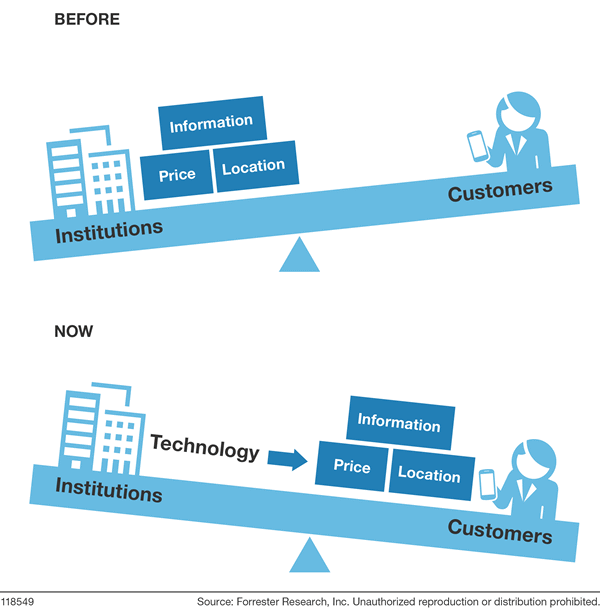
Nearly a decade has passed since Forrester said we were entering The Age of the Customer. That is apparent and has obvious implications. But as the decade of the 2020's dawns, I call out a deeper vision -- The Restoration of the Customer -- that could bring far more fundamental changes in the coming decade.

There are two surprising turns that may be taken in this decade to restore power to customers -- one that can fundamentally change how we conduct business, and one that can fundamentally change how we collaborate.

Those turns might just begin to undo many of the ills of the industrial revolution and of the computer revolution.  Both turns center on a return to enlightened human values:
  • The customer is not just a persona with a bundle of attributes that a business can learn how to manipulate, but a unique human being that has been bred since pre-history to thrive on a cooperative effort to create value and share it.
  • The user is not just a a source of attention that can be engaged to be sold to advertisers, but a customer to be served what they value -- again, a cooperative effort to create value and share it.
What those paying attention see

Forrester put the basic drivers nicely (emphasis added):
In this era, digitally-savvy customers would change the rules of business, creating extraordinary opportunity for companies that could adapt, and creating existential threat to those that could not. ...It requires leaders to think and act differently – in ways that feel foreign, unfamiliar, and counter-intuitive. And honestly, it is simply hard to do. ...These dynamics will endure as new technologies like artificial intelligence and robotics emerge to challenge core notions of what it means to be a company, what it means to build human capital, and what it means to compete and win.
...And, a deeper vision

Here I point to some little recognized ideas on how re-centering on value can change not only the dynamic of commerce, but also a parallel dynamic of customer value that is equally important.
  • First, the commercial dynamic that Forrester describes is just the foundation for reversing how the "progress" of technology cost us the human dimension in commerce -- a dimension that we had when commerce was just the way villagers did business with one another -- with human beings on both sides of an ongoing relationship. 
  • Second, we humans, as "customers" of Web services, have lost control of our experience of the world.  Our central experience of human interaction has been hijacked by platforms who "engage" us in order to profit from bombarding us with advertising and paid propaganda.
First: Back to the future of commerce

Consumers are increasingly alienated from the companies they do business with. Instead of neighbors or shopkeepers, we deal with soulless institutions that we distrust and feel abused by. That has been, increasingly, the price of productivity and material riches. But now technology has advanced far enough to restore the dimension of human values -- if we applied to do so. That does not require that we abandon the miracle of capitalism, but only that we bring it back to the marketplace of human value. Technology now makes it possible for even large faceless institutions to build human interfaces that behave with human values. That will drive institutions to interact with human in ways that are more truly human.

FairPay is a framework for centering on why and how to do that. The key is to recenter on relationships and the creation and sharing of value in ways that are tailored to each individual. Specifics on how to do that are in my FairPayZone blog, some articles written with prominent marketing scholars, and my 2016 book. Some of the best places to begin to understand this are:
Second: Who does it serve? - a course correction in how we experience the world

Social media and other online content services have changed how we experience the world, including how we interact with other people. Computer-mediation began with great hopes, but now it seems we have built a Frankenstein's monster.  As growing calls for change are beginning to focus on new levels of regulation, it is not enough to regulate against specific harms. Instead we must refocus on what we want to regulate for -- who these "services" serve, and what we want these platforms to facilitate. They were supposed to make us happy and smart -- instead they are making us angry and stupid. But technology can reverse that, if we incentivize that.

We can design new architectures for our interactive media that create value for us.  The key is to recognize that each of us is an individual, and we should be able to individualize our services, mixing and matching offerings to make just the service we want for what we are doing now. The most urgent part of that is to shape our media services to give each of us what we value. The Web stated out seeking to do that, and we can return to that vision. It won't be free, but it can be affordable. And we have seen that "free" is not really affordable (because it is not really free). If we do not change direction, our democracies and our civilization will collapse. Some starting points for seeing how:

(Cross-posted with my other blog, Smartly Intertwingled.)